
Why did I chose froyo and why does it interest me?
I chose to research into frozen yoghurt as when reading the brief it suggested that we research into something we like to do - I love to grab some frozen yoghurt, an invention - what better than a tasty cold treat thats not going to require a trip to the gym to burn off afterwards? The first time I ever tried frozen yoghurt was back in 2007, I was on a family trip in the U.S and I came across a Pinkberry shop in California, I'd heard a lot about the shop, I'd seen that a lot of celebrities had visited the chain to grab some froyo, I'd never been in a rush to try this food before, however due to its association with celebrities and the cool culture which flowed out of the doors, I decided that it was something I would try. I really enjoyed my first experience, and when I returned from my holiday I ate it now and then, but it wasn't until a trip this year, when I went to Barcelona where I found a small independent yoghurt shop that I really began to fall back in love with this food. When I visited the south of France later on in the summer, I again, went in search of another frozen yoghurt shop. And when I came back, I found a great one in Leeds. I've always loved ice cream, i'd bite straight into ice lollies as a kid, and always had a soft spot for cold desserts, but getting older, You start to learn how to love your body, and with frozen yoghurt I thought that I could still enjoy an icey dessert (pushing my old favourite ice cream aside) but still be good to myself.
About that froyo...
I first searched for information regarding how frozen yoghurt first came around, this information was very accessible coming from wikipedia:
'Frozen yogurt (also spelled frozen yoghurt; also known by the tradenames Frogurt and FroYo) is a frozen dessert made with yogurt and sometimes other dairy products. It varies from slightly to much more tart than ice cream, as well as being lower in fat (due to the use of milk instead of cream).'
'Frozen yogurt may or may not contain live and active bacteria cultures.'
The History of froyo...
- Frozen yogurt was introduced in New England, north-east United States, in the 1970s as a soft serve dessert by H. P. Hood under the name Frogurt.
'name changed to HP Hood Inc.; 1972 - first dairy to produce frozen yogurt in U.S., Frogurt (based on Bloomingdale's request for low-fat frozen dessert)' Quote
- In 1978, Brigham's, a Boston-based ice cream, candy and sandwich shop chain, under the direction of their VP of Marketing & Manufacturing, Jerry Lavely, a food industry innovator, developed and introduced the first packaged frozen yogurt called Humphreez Yogart.
- Around this same time, another packaged frozen yogurt product, called "Danny" debuted from Dannon. This variation was a raspberry yogurt product on a stick and covered with dark chocolate.
- Both were originally intended as a healthy alternative to ice cream, but some consumers complained about the possibly unexpected tart taste and manufacturers began production of recipes that contained more sugar.
(Therefore counteracting the idea that frozen yoghurt could be a healthy alternative to ice cream)
- Frozen yogurt took off in the 1980s, reaching sales of $25 million in 1986. In the early 1990s, frozen yogurt was 10% of the frozen dessert market.
- According to the below infographic I found, frozen yoghurt took a dip during the 90's, However during the 2000's popular frozen yoghurt brands from korea made their way over to the U.S.
- Currently throughout the U.S. frozen yoghurt chains are one of the most successful franchises, and some of these have began to Branch out into the U.K.

source
Earliest sign of Froyo in the U.K...
The Earliest frozen yoghurt brand to come out of the U.K that I could find was started up by two friends whom first began selling frozen yoghurt from their trike in Tenby (where they lived) whilst still in school.
'We have since funded each stage of the business with proceeds from the previous stage. Our business practices have become more professional over time but it still feels more like hanging out with a friend than work.


Read more: http://www.livestrong.com/article/484026-does-frozen-yogurt-contain-live-cultures-like-l-acidophilus/#ixzz2eydndFcF

- Self serve yoghurt shops also cater to those who would like to be able to tailor their frozen yoghurt to their own wants.
- Portion control for those who are health conscious.
- Quicker than waiting in a queue to be served.
- However some believe that the self serve shops take away from the enjoyable factors of being served your food etc.
How Branding and identity is used in frozen yoghurt establishments.
- The personality of a brand.
- 'What makes Pinkberry, Pinkberry? If you said the yogurt, you’re only half right. Customers stand in line for a taste of the yogurt, but they get in that line because of the brand's personality.'
- Authentic, lovingly crafted, inspired, thoughtful, anticipatory, intuitive, clean, light, refreshing, premium, current (but) not trendy. Kind of like a best friend. Source
Earliest sign of Froyo in the U.K...
The Earliest frozen yoghurt brand to come out of the U.K that I could find was started up by two friends whom first began selling frozen yoghurt from their trike in Tenby (where they lived) whilst still in school.
'We have since funded each stage of the business with proceeds from the previous stage. Our business practices have become more professional over time but it still feels more like hanging out with a friend than work.
Since we started our business aged 17, our biggest challenge has been to appear credible.' Source
- Together they opened a store in Brighton which they named 'LICK'
- At the time in which they opened the store, frozen yoghurt wasn't very well known about in the U.K.
- In the early days of the business, customers would come into the store on the basis of curiosity, here they had to exaplin to each customer what froyo was, some would turn away and others would try this new dessert and others would walk away.
- After two years of running their shop in Brighton they began selling take home tubs into the retail market.
- It was obvious that there was a demand for a product that was indulgent but healthier than ice cream and had a real yoghurt taste.
The U.K's leading frozen yoghurt brand/company

Yoomoo is the U.K's leading Frozen yoghurt brand.
- There are 10 uk stores.
- Harrods, Canary wharf, Westfield, stratford shopping centre.
- In 2011 yoomoo launched its first franchise in Athens, Greece with more to follow in 2013.
- The product offered is all natural and fat free.
- yoomoo has a range of at home products which are hitting major supermarkets in the UK this march (2013)
- Frozen yoghurts will also be sold in gyms, cinemas and top visitor attractions in 2013.
How was yoomoo created?
- Founders Amanda and Daniel visit L.A and discover frozen yoghurt in 2009.
- They brought the frozen yoghurt revolution to the U.K.
- The first yoomoo yoghurt bar is opened.
- Bars spread across the U.K.
- yoomoo froyo is introduced into U.K supermarkets.
- Currently there are 20 yoomoo bars across the globe.
- Currently there are 20 yoomoo bars across the globe.
Top 5 U.S Frozen Yoghurt franchises.
What criteria are competing frozen yoghurt franchises up against?
Looking from a subjective view of franchises, we can assume that location, revenue, and the total number of stores play a main part in discovering the top 20 frozen yogurt franchises in the Unites States. Location plays a role because it shows the versatility of the brand name. Typically, frozen-yogurt stores dominate the summer-loving states because fro-yo is most popular during the warm weather, so if a brand can expand victoriously into other areas of the Unites States and the world, it proves how versatile the brand really is. Total revenue is a given, because success comes with a reward in this country, and the total store count shows a level of trust, interest, and confidence the public has in the brand’s sustainability.
Taking a more objective approach, variety/uniqueness seems to be another key to a successful frozen yogurt franchise in this industry as well. There is more competition now more than ever after the fro-yo comeback around 2005 since the decline of sales in the late nineties. With the industry booming and stores popping up all over the United States, variety in everything from yogurt flavors and toppings, to community outreach, and actual design of the stores is what contributes and makes for a successful fro-yofranchise. Stores are offering gluten-free, kosher-certified, and dairy-free options, soft-serve Greek yogurt, sorbets, and gelatos, as well as a never-ending array of toppings. Many stores are becoming more environment-conscious by using biodegradable cups, cornstarch spoons, and partnering with organizations or initiatives that benefit the community through use of a portion of their revenue. The old-fashioned ice cream parlor décor is being ditched and reinvented into a fresh, modern, and sophisticated hybrid of the perfect college hangout and ideal spot for a casual business meeting.
1. 16 Handles.
This brand offers 16 kosher-certified yogurt flavors, 55 fruit, dry, and syrup toppings. They use cornstarch spoons, biodegradable cups, as well as recycle and compost whenever possible. In addition, they are partnered with Trees for the Future, where every 16 Handles location helps to plant 16 trees a day at around 48 locations.
2. The fuzzy peach

There are 18 locations with 7 coming soon. They offer lactose free, gluten free, non-fat, low fat, premium, and no-sugar added flavors with around 37 to choose from and 74 toppings to add. They also provide catering services.
3. Yoghurtini

They have 28 locations with 8 coming soon and offer 10-16 flavors in-store and over 65 different toppings. They produce yogurt containing about 10 times the amount of live and active cultures recommended by the National Yogurt Association (NYA), participate in fundraising, and offer to-go containers of fro-yo.
4. Pinkberry
They provide kosher-certified frozen yogurt with around 17 kosher-certified toppings, have The National Yogurt Association approval, use farm fresh ingredients, offer Greek frozen yogurt, take-home size frozen-yogurt containers, and catering options at more than 170 locations world-wide.
5. Yoghurtland
With over 200 locations, there are around 80 frozen yogurt flavors being used at different stores. They also offer more than 15 different kinds of seasonal real fruit and 45 choices of other toppings. In addition, they actively participate in community fundraising and offer catering services.
How Big is the frozen yoghurt industry?
Frozen yogurt reinvented itself in the early 21st century through a return to the original ‘tart’ flavour, differed the product from other frozen dessert products of a sweeter taste. This, combined with a more health-conscious consumer, attracted by the low calorie per portion, caused frozen yogurt popularity to soar over the past decade which has grown despite the tough economic conditions. Such demand spurned growth in revenues from $500m to $700m in the US market alone over the past five years. The major brands have grown rapidly through a franchise system of ownership, allowing franchisors to use the brand and the customer interest it generates.
The future for the international frozen yoghurt industry...
internationally the frozen yogurt market is still in an embryonic stage. Froyo shops are still predominantly concentrated around major capital cities and have not yet spread beyond into supporting towns. This is most likely a result of the lack of awareness of frozen yogurt as a product as opposed to consumers rejecting the product.
It is clear that many emerging markets have much to offer many frozen yogurt firms as a result of both their growing wealth and the age demographics of their population. As the middle-class in the developing world becomes larger, these people will demand more ‘Western’ luxuries including frozen yogurt. In addition, having demonstrated that the younger generations drive demand for frozen yogurt, these generally younger populations should exhibit a keen interest in frozen yogurt and encourage the growth of brands in these markets.
Frozen yoghurt is the new fashionable trend to hit the UK from America as consumers become more health conscious in search of healthy alternatives. The UK market is expected to reach £25 million in 2013 regardless of the wider economic climate.
The three most dominant froyo franchises in the U.S
By 2017, the entire U.S. frozen-yogurt industry, including both franchises and individual stores, is expected to bring in $931.5 million in revenue annually, according to a report from Los Angeles-based industry research firm, IBISWorld.
TCBY is the dominant franchise in the industry in the U.S. with almost 18 percent of the market, as of Oct. 2012, the most recent industry-market research IBIS has available. Pinkberry is close on its heels with 17 percent of the U.S. market, and Red Mango has 15 percent of the U.S. industry, the report says.
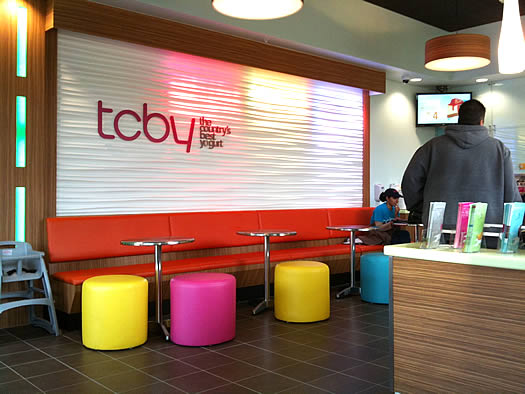
TCBY (The country's best yoghurt) - Most dominant.
The Country’s Best Yogurt, known by millions as TCBY, has been a frozen yogurt innovator ever since our first shop opened in Little Rock, Arkansas in 1981. Our great-tasting, low-fat products were immediately embraced by the public as a healthier treat option and as a result, TCBY began franchising the following year. The year 2000 witnessed the perfect marriage of two household brands when TCBY combined forces with Mrs. Fields Famous Brands.
In 2005, TCBY renewed our commitment of delivering the very best overall experience to our customers by re-focusing our product offerings and in 2007 we rolled out a new line of tasty yogurt-based smoothies.
Today, TCBY leads the market in nutrition, taste and new product innovation. The concept boasts the healthiest traditional frozen yogurt choice, TCBY® Super Fro Yo, the 2011 Prepared Foods Excellence in Innovation award winner, as well as the industry’s first-to-to-market Greek frozen yogurt option. Our new self-serve platform with a contemporary look and atmosphere that appeals to customers of all ages is perfect for attracting today’s active, on-the-go consumers.
Inside TCBY...


The self serve...


There is a focus on the health benefits with a range of graphics like the above across the website.

Another health an innovation incentive above as TCBY were the first franchise to retail the greek yoghurt option...

On the website customers can calculate how nutritional their favourite/signature combination of yoghurt and toppings will be. The results are often very pleasing, adding to the idea of fro yo being the healthy choice for a meal or dessert.

I decided to make my own favourite frozen yoghurt combination to see what the nutritional outcomes were. I am a serial purchaser of frozen yoghurt not because of the health benefits but the signature tart and tangy taste of original yoghurt. It was great to see with my own eyes how good frozen yoghurt actually is. For 4 oz of plain vanilla fro yo topped with strawberries and chocolate sprinkles there were only 1.8 grams of sat fat and 0 trans fat. The total amount of calories I would intake is 152.2.
80 of these calories came from the 4 fl.oz of vanilla frozen yoghurt.

This was massively healthy when compared to the same amount of vanilla ice cream (66g - 4fl.oz)

For the same amount of ice cream there are 57 more calories thats almost 75% more!

On the TCBY website we are also able to view factors such as, is the yoghurt gluten free and does it comply to the new craze Super fro yo?
What is Super fro yo?
Families, Seniors, Active Lifestylers, Fitness Enthusiasts, and Athletes Can Finally Have Their Just Desserts Without the Guilt
Dieting, eating right, going organic, exercising … continues to weigh heavy on the American way of life, coupled with the ongoing guilt associated with our love of dessert. TCBY, The Country’s Best Yogurt, says you can not only lose the guilt but gain some tangible health benefits by choosing its "Super Fro-Yo" frozen dessert.
Super Fro-Yo, a frozen yogurt packed with Vitamins A & D, probiotics, dietary fiber, protein, calcium and so much more, is a great tasting, healthy alternative to treats high in saturated fat and empty calories. Although there are many forms of beneficial yogurt in the market today, TCBY’s Super Fro-Yo sets a new standard for healthy nutritionals. To qualify as Super Fro-Yo, nutritional information must meet the following guidelines per serving:
- Calories: Does not exceed 120 calories
- Dietary Fiber: Must have a minimum of 3 grams
- Protein: Must have a minimum of 4 grams
- Probiotics: Must have a minimum of 7 types
- Minimum 20% DVA of vitamin D, and 10% DVA of vitamin A
- Active Cultures: Must have a minimum 20 billion live active cultures after manufacturing
- Saturated Fat: Does not exceed 2 grams.
"We are in the business of selling indulgence to the American consumer," states Timothy Casey, CEO of TCBY. "However, we believe it can be done in a legitimately healthy way without compromising taste and that sense of indulgent satisfaction. The 'Super Fro-Yo' classification is important to us for two reasons. One, not all frozen yogurt is created equal. Two, as we place 'Super Fro-Yo' nutritionals up against ice cream and other fro-yo nutritionals, we are confident parents will feel a great deal better about their kids enjoying TCBY."
"We are purposefully transparent about the requirements for 'Super Fro-Yo' because in addition to providing a great tasting product full of 'Super' nutritionals, we are trying to educate the population about the importance of dietary fiber and probiotics. The research tells us that the average consumer knows at some level that live cultures and probiotics, for example, are good for you, but they don’t understand how good and why. 'Super Fro-Yo' is a great platform to educate the marketplace and hopefully change behavior."
What Is froyo made from?
FROZEN YOGHURT IS NOT A HEALTH FOOD, Eating a portion of frozen yoghurt is not comparable to eating a fruit salad. However It can be a healthier option to other frozen treats such as ice cream.
'Ice cream and frozen yogurt are both frozen treats made from dairy, but there is a significant difference that sets them apart. In order for a frozen treat to be legally labeled as ice cream, it must contain at least 10 percent milkfat. This requirement is usually met through the addition of cream, and premium ice cream can contain as much as 16 percent milkfat. Frozen yogurt is not made with cream and does not have a fat requirement. Instead it is made with cultured milk such as yogurt.
Frozen yogurt usually consists of milk solids, some kind of sweetener, milk fat, yogurt culture (Lactobacillus bulgaricus and Streptococcus thermophilus are common cultures[6]), natural or artificial flavorings, and sometimes natural or artificial coloring.
Milk fat comprises about 0.55-6% of the yogurt. Added in quantities inversely proportional to the amount of milk solids, the milk fat lends richness to the yogurt. Milk solids account for 8-14% of the yogurt's volume, providing lactose for sweetness and proteins for smoothness and increased resistance to melting.[6] Cane or beet sugar provides 15-17% of the yogurt's ingredients. In addition to adding sweetness, the sugar increases the volume of solid ingredients in the yogurt, improving body and texture.[6] Animal gelatin and/or vegetable additives (guar gum, carrageenan, etc.) stabilize the yogurt, reducing crystallization and increasing the temperature at which the yogurt will melt. This stabilization ensures that the frozen yogurt maintains a smooth consistency regardless of handling or temperature change.[6]
When reading about frozen yoghurt I was confused about the myth, Do the pro biotics and live cultures within yoghurt survive the temperatures of frozen yoghurt, or due to this change do they become inactive?
'
What is Frozen Yogurt?
Frozen yogurt is a fermented dairy product containing live cultures within a whole, nonfat, low fat or skim milk base. During the yogurt-making process, manufacturers inoculate the dairy base with two live cultures -- Lactobacillus bulgaricus and Streptococcus thermophilis -- which kick starts the fermentation process. According to Tufts University's "Tufts Journal," manufacturers often add additional cultures such as L. acidophilus and Bifidobacteria to improve the probiotic benefits of the yogurt. A flash freezing process then converts the yogurt to frozen yogurt.
Probiotic Survival
Frozen yogurt is just as healthy as refrigerated yogurt. In fact, the University of Michigan Health System explains that the probiotics within yogurt are able to survive the freezing process without altering the health benefits. Lactobacillus bulgaricus and Streptococcus thermophilis as well as any added live cultures such as L. acidophilus enter a dormant state during freezing, returning to an active state when they come in contact with body heat after ingestion.
Read more: http://www.livestrong.com/article/484026-does-frozen-yogurt-contain-live-cultures-like-l-acidophilus/#ixzz2eydndFcF
Other Audiences for frozen yoghurt:
- People who want a healthy alternative to ice cream and other frozen yoghurt treats, and don't want to feel like they need to go to the gym for an intense work out afterwards.
- Adults whom have children that like to eat ice cream, however would prefer them to have a healthier alternative.

I found a really great article online that states whom the demographic audience is within the frozen yoghurt market.
-The target market for frozen yogurt brands focuses mainly on three groups: young adults,
women, and people who are health conscious.
- Frozen yoghurt shops placed around college campus'.
-Newer companies, such as Pinkberry, have focused on young adults, which has its problems and
benefits. By targeting a younger population, companies can utilize “word of mouth” promotion.
however, a younger public also tends to have more fickle taste and preferences. Once the
excitement of the fad wears off, companies may be negatively effected
- Meanwhile, older and established companies, such as TCBY, target women with ages ranging
from 18-49 (”Barrier”).
- Frozen yoghurt is better for those whom are lactose intolerant... 'Frozen Yogurt, as its name suggests, is made with yogurt rather than cream, meaning it
contains live bacteria (probiotics) to help with digestion. Frozen Yogurt also contains enzymes to
help break down dairy, having less of an effect on the lactose intolerant than regular ice cream.'
- Portion control for those who are health conscious.
- Quicker than waiting in a queue to be served.
- However some believe that the self serve shops take away from the enjoyable factors of being served your food etc.
How Branding and identity is used in frozen yoghurt establishments.
- The personality of a brand.
- 'What makes Pinkberry, Pinkberry? If you said the yogurt, you’re only half right. Customers stand in line for a taste of the yogurt, but they get in that line because of the brand's personality.'
-Ferroconcrete fell in love with the essence of Pinkberry and, inspired by characteristics of the yogurt and the modern décor of the first store, created an entire personality for customers to love and connect to.
-Once in love, Pinkberry's loyal customers 'Groupies' interact with the brand and each other, sharing photos, stories, events and their love of Pinkberry, now at over 200 stores worldwide.
-People don’t eat frozen yogurt anymore. They eat Pinkberry. That’s a brand, personified.
- Authentic, lovingly crafted, inspired, thoughtful, anticipatory, intuitive, clean, light, refreshing, premium, current (but) not trendy. Kind of like a best friend. Source




No comments:
Post a Comment